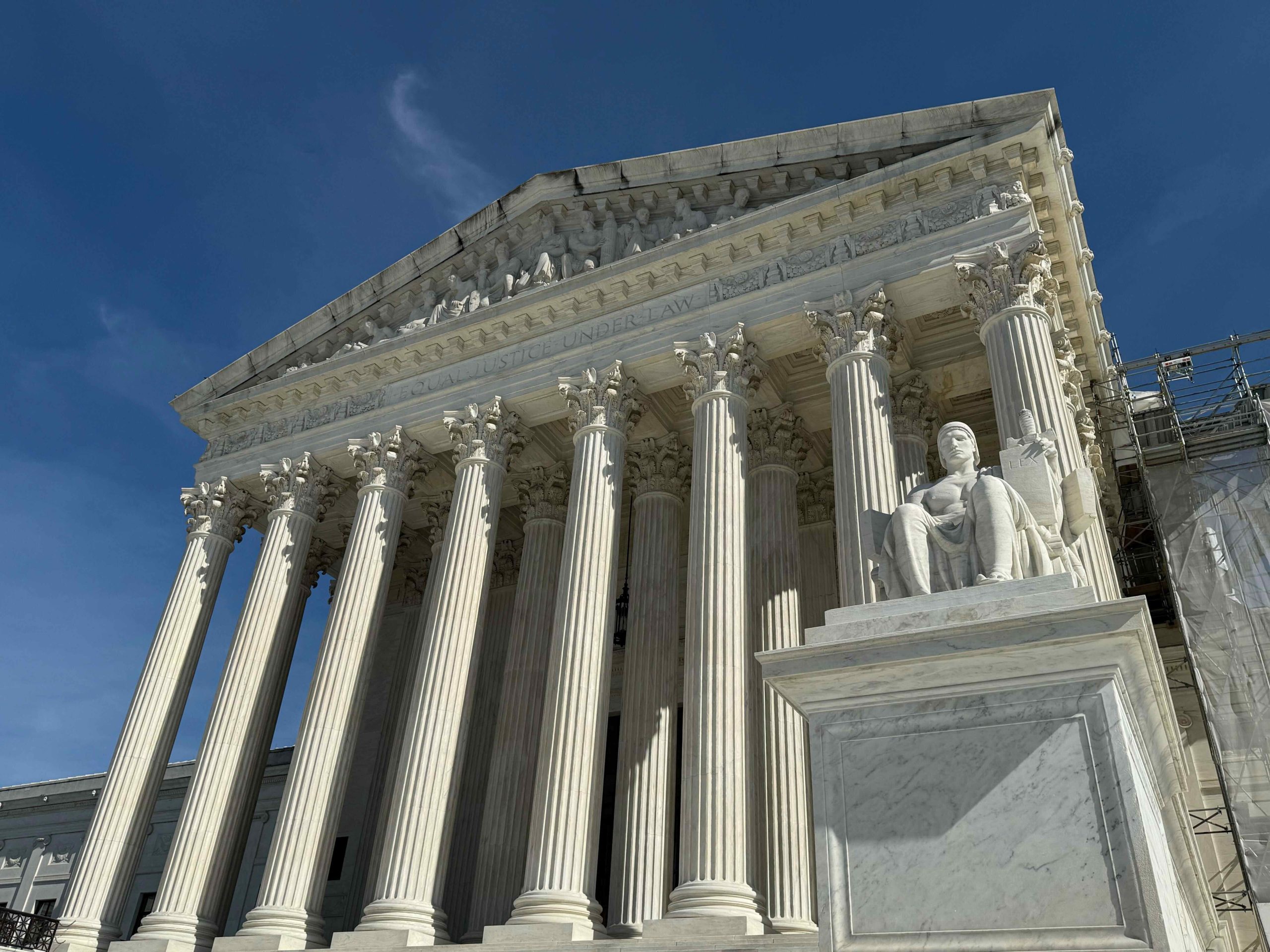
Week Ending May 16, 2025
The Regents of University of California et al The Broad Institute, Inc., and others.0100 2022-1594, -1653 (Fed. Cir. (PTAB) May 12, 2025). Opinion by Reyna, joined by Hughes and Cunningham.
The Regents of the University of California (Regents) and The Broad Institute (Broad) both claimed to have invented technology relating to the adaptation of CRISPR (clustered regularly interspaced short palindromic repeats) systems to edit eukaryotic DNA. They filed competing patent applications on the technology, and the Patent Trial and Appeal Board declared an interference to resolve the dispute over priority.During the interference proceeding, the Board rejected Broad’s claim construction for the phrase “guide RNA.” The Board also rejected Broad’s motions to change the interference count and, alternatively, to remove certain claims from the interference proceeding. Next, the Board addressed Regents’ motion seeking to be accorded the benefit of certain filing dates, which the Board partly denied and partly granted.
After resolving claim construction and the parties’ preliminary motions, the Board proceeded with the interference under “Count 1.” The Board rejected Regents’ asserted dates of conception and reduction to practice and held that Regents’ first and second patent applications lacked sufficient written description for Count 1. The Board ultimately awarded priority to Broad. Regents then appealed, challenging the Board’s decisions on conception and written description, and Broad conditionally cross-appealed the Board’s claim construction.
The Federal Circuit affirmed-in-part, vacated-in-part, and remanded as to Regents’ appeal. And the Federal Circuit dismissed Broad’s cross-appeal as moot.
On conception, the Federal Circuit held that “the Board legally erred by conflating the legal standards for conception and reduction to practice.” The Board had required Regents’ scientists to have known their invention would work, but the Federal Circuit ruled that it is “well established that an inventor need not know that his invention will work for conception to be complete.” The Board thus erred “by focusing on Regents’ scientists’ statements of uncertainty, without considering whether those statements led to modifications in their experiments that substantively changed their original idea.”
The Federal Circuit ruled that the Board erred in other areas as well, including by (1) “expressly refusing to consider whether a person of ordinary skill in the art could have reduced the invention to practice”; (2) “failing to consider evidence of purported experimental success by others presented on the record”; and (3) “failing to consider whether Regents’ scientists described routine methods or skill in their disclosures at asserted conception dates, and whether they used routine methods or skill in subsequent, purportedly successful experiments.” Thus, the Federal Circuit vacated the Board’s decision on conception and remanded.
Next, the Federal Circuit addressed Regents’ challenge to the Board’s determination that two of Regents’ patent applications lacked written description support for Count 1. The Federal Circuit ruled that the Board had applied the wrong The Federal Circuit disagreed, emphasizing “the well-established principle that the level of detail required to satisfy the written description requirement varies depending on the nature and scope of the claims and on the complexity and predictability of the relevant technology.” The Federal Circuit ruled that under this principle, the Board “correctly analyzed whether a person of ordinary skill in the art would understand that Regents had possession of the claimed subject matter, given the Board’s uncontested determination that the subject matter at issue is highly unpredictable and complex.”
Lastly, the Federal Circuit resolved Broad’s cross-appeal on claim construction. Regents argued the cross-appeal is The Board’s decision to deny Broad’s preliminary