Tariffs impact on Oil and Gas Industry
Some of those tariffs have been rolled back, but current tariff levels are still the highest they’ve been in almost a century. An investigation into critical minerals and derivatives is underway. The exemptions for rare minerals and crude oil will not prevent the oil and gas industries from feeling the pinch. Tariffs will squeeze American energy production from several angles, from extraction to refining to electricity production and transmission.
Tariffs Raise the Price of Steel
Raw materials like crude oil and rare minerals are not the only inputs to the energy ecosystem we import. Pipes are used to transport petroleum products many times along the value chain. What is the material of these pipes? Steel. In the most recent Federal Reserve Bank of Dallas survey of the oil and gas industry, several comments highlighted steel tariffs (25 percent, levied under Section 232) specifically as driving higher costs and making expanding production less appealing.
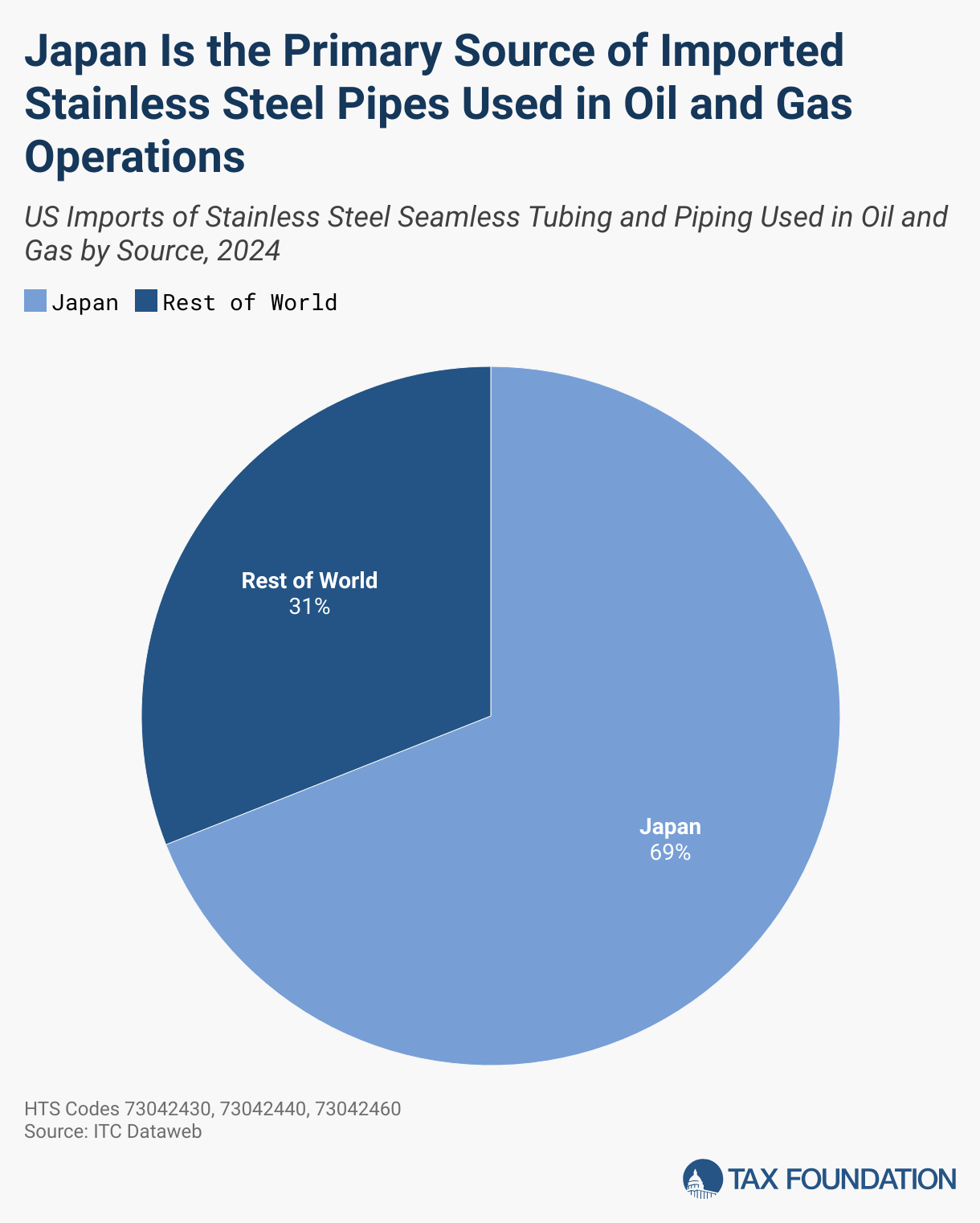
Tariffs are pushing up the price of steel and hitting specialized types of steel products used for technologically challenging parts of the oil and gas extraction process. For example, offshore oil drilling rigs located in the Gulf require non-recycled metal. Offshore oil rigs purchase specialty pipes from overseas because the US steel industry is a specialist in recycled steel. Overall, 15 percent of the imported iron and steel used in oil and natural gas operations comes from Japan. However, in certain categories, such as seamless stainless steel tubing or casing pipe, Japanese imports make up a clear majority.
Tariffs Hit Capital Equipment, from Oil Extraction to Electricity Transmission
Tariffs will also hit more complex equipment and machinery. This will harm American energy in all its forms. Tariffs on heavy equipment used in American oil fields will affect oil and gas extraction. Tariffs will also affect major categories of equipment that are used by oil refiners, natural gas processors and pumping equipment. Italy, for instance, manufactures certain compressors important to liquid natural gas (LNG) liquefaction processes.
Expanding beyond the oil and gas production ecosystem, tariffs on capital goods will also hurt electric power generation. American electricity producers have imported equipment to increase supply as the demand for electricity has increased. Wood Mackenzie is an energy analytics company that noted 80 percent of the critical transmission and distribution gear in the US market in 2023 was imported. Of the US imports of equipment for electricity generation, transmission and distribution, and storage, 50 percent came primarily from Mexico and China. Gas turbines, unlike specialized stainless steel tubes, are a strength of American manufacturing. We are the largest gas turbine producer in the world and a net gas turbine exporter. The growing demand for turbines is causing delays. Tariffs increase the cost of these imports and extend construction delays, potentially preventing new electricity supply from coming online. Tariffs raise the cost of those imports and extend construction delays, potentially preventing new electricity supply from coming online.
Retaliatory Tariffs Hit American Exports
While the US administration may not want to hit crude oil with tariffs, other governments may disagree. The United States exports a lot of petroleum products, especially to the European Union. The production of American oil products will be hurt if the market for these products is damaged abroad. China retaliated against the US for imposing “reciprocal” tariffs of 125 percent on Chinese imports. In 2023, US gas and oil exports to China will total $17,6 billion. This represents more than 12 percent the US’s China bound exports. Tariffs are not the only means by which China can retaliate against trade. China can restrict exports directly to the United States. China has restricted exports of rare earth minerals, which is particularly relevant to the energy industry.

Macroeconomic Slowdown Is the Biggest Threat
So far, we’ve focused on industry-level effects. A macroeconomic slowdown is the biggest threat to American oil and gas production. Oil and gas is a cyclical business: an economic slowdown means a reduction in energy demand, and reduced demand means companies will reduce their quantity supplied–i.e., they will reduce production.
Ironically, the upshot of a global economic slowdown and domestic
recessionA recession is a significant and sustained decline in the economy. A recession is a significant and sustained decline in the economy.
In this scenario, lower prices from reduced demand would likely offset (and then some) any price increases from tariffs on capital inputs. In that scenario, lower prices from reduced demand would likely offset (and then some) any price increases from tariffs on capital inputs.
However, as economist and blogger Scott Sumner often says, “never reason from a price change.” Lower prices due to a positive supply shock, like new production being brought online or new technology lowering extraction costs, are good news. A negative demand shock could lead to lower prices. Its
tariffTariffs are taxes imposed by one country on goods imported from another country. Tariffs are trade barriers which increase prices, reduce the amount of goods and services available to US businesses and consumers and place an economic burden on foreign suppliers.
agenda is directly in opposition to it. American drillers extract American oil with Japanese steel. American refiners use Italian compressors to process American and Canadian crude oils, and American gas power plants use Mexican and Chinese wires to transmit electricity from American gas turbines. Raising costs with taxes on business inputs and pushing the economy into an uncertainty-driven slowdown will hurt American energy production, not help it.Stay informed on the tax policies impacting you.Subscribe to get insights from our trusted experts delivered straight to your inbox.
Subscribe to our Newsletter
Share this article
TwitterLinkedInFacebook