David Souter, retired Supreme Court Justice, dies at age 85
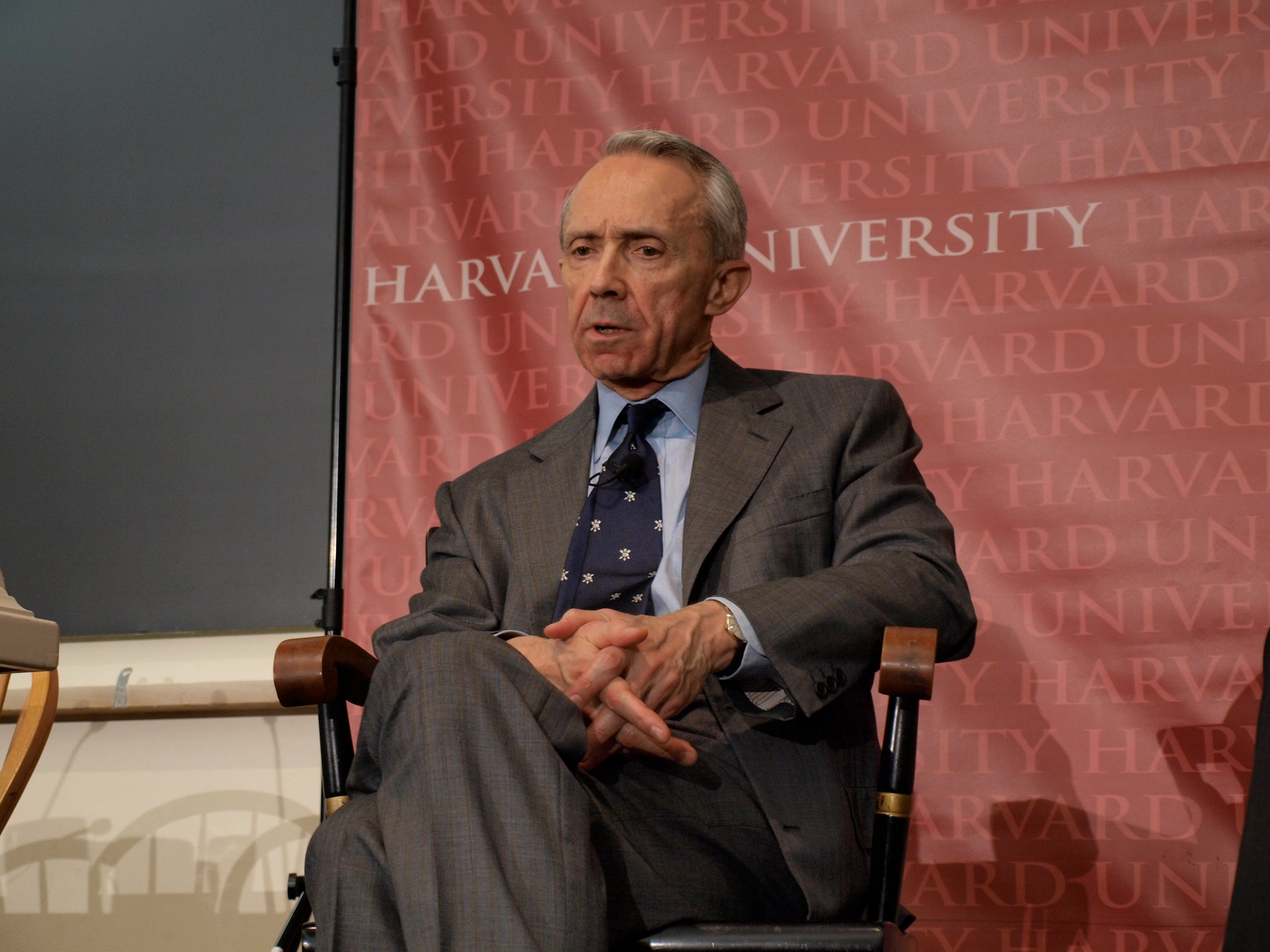
He was 85 years old. He was 85. David Hackett was born in Melrose, Massachusetts, on September 17,1939. He graduated from Harvard College, in 1961. He was named a Rhodes Scholar and spent two years at Oxford University’s Magdalen College. In 1963, he earned a master’s degree in Jurisprudence. After graduating from Harvard Law School, Souter worked for two years at Orr and Reno in Concord, a small law firm.
Souter began his career in the state government by working for Warren Rudman. Rudman was then the Attorney General of New Hampshire. In the eight years that followed, Souter served as assistant attorney general, then deputy attorney general, before being named attorney general in 1976. He served as an assistant attorney general for two years, before being appointed as a trial court judge in a state. In 1983, he became a judge on the state supreme courts, where he remained for seven years. On May 25, 1990, he received unanimous confirmation by the U.S. Senate for the United States Court of Appeals 1st Circuit. But Souter’s first stay at the 1st Circuit lasted only a short time. In July 1990, at the age of 50, Republican George H.W. Bush nominated Souter as a replacement for liberal lion Justice William Brennan. Bush called him “extraordinarily smart” and cited the reputation of being “extraordinarily honest.”
Souter was notable for his lack of a “paper-trail”: he had not written or given any speeches which might shed light on views on controversial issues such as abortion. Sununu told the New York Times that he was looking for someone who would be a strict constructionist, consistent with basic conservative attitudes, and that’s what he got. Sununu also said he “was able to tell the President that I was sure if he encountered Federal questions,…,………….. In an interview with the New York Times, Sununu said that he “was looking for someone who would be a strict constructionist, consistent with basic conservative attitudes, and that’s what I got.” Sununu added that he “was able to tell the President that I was sure he would do the same thing when he encountered Federal questions.”
Rudman, then a U.S. senator, described Souter as “the single most intellectually brilliant mind I have ever met.”
Questions and concerns about the possible effects of Souter’s confirmation on the Supreme Court’s 1973 ruling in Roe v. Wade, establishing a constitutional right to an abortion, dominated Souter’s confirmation hearing. Molly Yard, the then president of the National Organization for Women said, “I tremble for the country if you confirm David Souter,” stating that he “would be the fifth vote to reverse” that decision.
Souter’s confirmation was finally achieved by a 90-9 vote. He began his work on the court in October 1990. He joined a court that included three justices appointed under Ronald Reagan, Sandra Day O’Connor and Anthony Kennedy, as well as William Rehnquist, a conservative chief judge. In 1991, when Clarence Thomas was appointed as another justice by Bush, conservatives hoped for a sea-change at the court. But less than two year later, Souter would allay the fears of abortion rights advocates and earn the ire from anti-abortion groups when he joined Kennedy, O’Connor, and other justices to reaffirm that fundamental right to abortion in Planned Parenthood v. Casey. In 1994, Souter wrote the majority decision in Board of Education of Kiryas Joel Village Schools District v. Grumet. The court ruled that the New York law that created a separate district in the religious enclave of Kiryas Joel where a group of Ultra-Orthodox Jews lived was invalid. The children of the group attend private religious school, but the separate district created by law operated a public special-education program for children with disabilities. Souter explained that power “over public schools belongs to the State and cannot be delegated to a local school district defined by the State in order grant political control to a religious group.” Souter explained that power “over public schools belongs to the State and cannot be delegated to a local school district defined by the State in order to grant political control to a religious group.”
Souter acknowledged that “religious people (or groups of religious people) cannot be denied the opportunity to exercise the rights of citizens simply because of their religious affiliations or commitments, for such a disability would violate the right to religious free exercise.” But that does not mean, he continued, that a state can “deliberately delegate discretionary power to an individual, institution, or community on the ground of religious identity.”
More than two decades later, Souter once again wrote an opinion for the court that drew a line between church and state. In McCreary County V. American Civil Liberties Union the justices ruled by a 5-4 vote that two Kentucky counties were not allowed to display large copies the Ten Commandments inside their courthouses. Souter argued that the displays violated the Establishment Clause (in an opinion also signed by Justices John Paul Stevens and Ruth Bader Ginsburg) and should be understood in context.
Souter explained that a government entity’s purpose in taking an action like displaying the Ten Commandments “needs to be taken seriously under the Establishment Clause and needs to be understood in light of context; an implausible claim that the governmental purpose has changed should not carry the day in a court of law any more than in a head with common sense.”
And in Bush v. Gore, Souter joined Stevens, Ginsburg, and Breyer in dissenting from the majority’s decision to stop the recount of ballots in Florida, ordered by the Florida Supreme Court, that ultimately ensured George W. Bush the presidency.
Souter questioned the majority’s decision to intervene, arguing that if the court had not stopped the recount a few days earlier, “it is entirely possible that there would ultimately have been no issue requiring our review, and political tension could have worked itself out in the Congress.” “There is no justification,” Souter concluded, “for denying the State the opportunity to try to count all disputed ballots now.”
In his book The Nine, published in 2007, journalist Jeffrey Toobin described Souter as “shattered” by the court’s decision in Bush v. Gore – to the point that he “seriously considered resigning” from the court. Toobin reported that “he decided to remain on, but his attitudes toward the Court were never the same.” Roberts, Thomas and Justice Samuel Alito were the only justices younger than him. Souter’s decision to retire was not a complete surprise, however, because he has been known to dislike Washington, D.C. He once said that he held “the best job in the worst city.” Souter’s draft was a sharp criticism of the majority opinion. It would have gone beyond what the challengers asked for to invalidate two major decisions on campaign finance. Jeffrey Toobin, writing in the New Yorker described Souter’s draft as “an extraordinary, bridge-burning goodbye to the Court,” that Chief Justice John Roberts was afraid “could harm the Court’s credibility.” Instead of deciding this case then, Toobin wrote, the court heard the case again in the following term and instructed both sides to brief the larger questions. After his retirement from the Supreme Court in 2010, Souter was a regular fixture on the 1st Circuit hearing hundreds of cases. In Carson v. Makin he joined his colleagues to unanimously reject a challenge against a Maine program which paid tuition to some students attending private schools but prohibited the use of state money for tuition at private school that provided religious instruction. In June 2022, The Supreme Court overturned the 1st Circuit ruling. Chief Justice John Roberts wrote for a majority of six justices that when governments choose to subsidize private school, they must allow families the option to use these subsidies to pay religious schools. Roberts said that any other result would be “discrimination” against religion.
The Carson ruling was the third in a series of three decisions that allowed public funding to be used for religious schools. Last week, the justices heard arguments in a case that sought to extend the trio of decisions so as to allow the creation of the first religious charter school in the country. The decision is expected to be made in this case by late June or early Jul.
Posted in Featured, In Memoriam
Recommended Citation:
Amy Howe
David Souter, retired Supreme Court Justice, dies at age 85
SCOTUSblog
(May. 9, 2025, 10:31 AM),