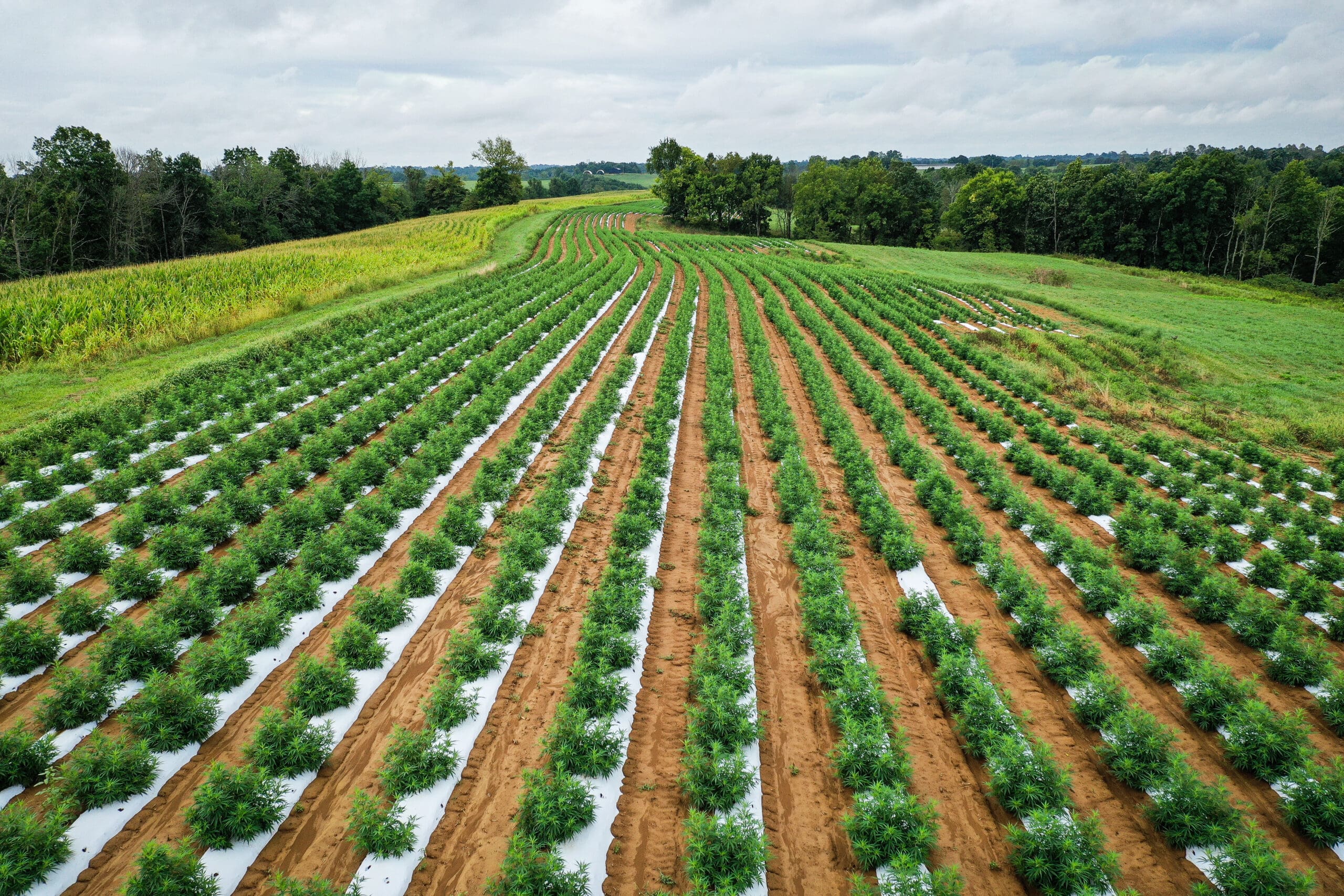
Tax Treatment of Hemp, Other Intoxicants and THC
The federal legalization of hemp in 2018 complicated federal-state efforts to reform cannabis. Hemp is legally distinguished from marijuana, and is limited to cannabis plants with delta-9 THC levels of 0.3 percent or lower. These products don’t fit within many existing state or federal product regulatory regimes, prompting increased efforts across states to regulate, or outright ban, their sale and use. These products don’t fit within many existing state or federal product regulatory regimes, prompting increased efforts across states to regulate, or outright ban, their sale and use.
This has led to a unique landscape of inharmonious hemp policy across states that undermines competition with other intoxicating substances and needlessly burdens markets with inefficiencies.
Some states have sought to integrate this new market by regulating and taxing these products similarly to marijuana or alcohol. In other states, hemp-derived intoxicants are treated differently than intoxicants of other types, creating disparities in the market and consumer incentives. Additionally, while marijuana markets are forced by federal prohibition to be intrastate, Congress has enabled interstate commerce in hemp products.
Federal legalization does not preempt states from regulating the sale of these intoxicating products, though states must tolerate the interstate transportation of compliant products if they allow any sales, according to court rulings. The debate has raged over whether state bans on hemp are legal under federal preemption or the dormant trade clause. A general lack of federal guidance has allowed for a disparate patchwork of regulatory treatments across state jurisdictions.
Many states treat intoxicating hemp very differently than marijuana. California, Colorado, Washington, and New Hampshire are all heavily restrictive on hemp despite marijuana being legalized, while Nebraska, Wisconsin, and New Hampshire allow intoxicating cannabis sales despite criminalizing pot. Other state legislatures and Congress have considered efforts to prohibit intoxicating hemp-derived products from allowed sales, including by statutorily redefining hemp to remove intoxicants from the legalized products.
Whether for hemp or marijuana, prohibitions or excessive regulations risk undermining public health and economic growth. Restricting legal markets hinders the development of industry and gives market share to illicit markets, which are more dangerous for consumers. These policies are also likely to reduce
taxAn tax is a mandatory payment collected by local, State, and National governments from individuals and businesses to cover the cost of general government goods, services, and activities.
revenues generated for the programs attempting to address the problems associated with consumption much more than any reductions in that consumption resulting from prohibition.
Discordant state tax treatment of hemp products disrupts legal transactions, increases compliance costs, and distorts competition between hemp and other intoxicants like alcohol or marijuana. In states that tax hemp disproportionately the market for alcohol or marijuana is favored. Elsewhere, state taxes on alcohol or regulation of marijuana may drive consumers to cheaper hemp-derived intoxicants.
State and federal regulations of hemp and hemp-derived products could be reformed to harmonize treatment across jurisdictions and equalize treatment of comparable products.
Where states have already legalized recreational marijuana, high-THC intoxicating hemp-derived products could be integrated into a uniform cannabis regulatory and taxation scheme. In other places, a principled regulation scheme for intoxicating cannabis could be the basis for integrating marijuana products. Best practices for cannabis taxes include targeted ad-quantity taxes based on potency or weight when potency is difficult to measure. Intoxicating hemp can be taxed at a flat rate based on the THC content, regardless of retail price or type of THC. As with any
excise taxesAn excise is a tax that is imposed on specific goods or activities. Excise taxes can be levied on a variety of items, including cigarettes, alcohol, soda, gasoline and insurance premiums.
, the revenues should be used to address problems associated with the consumption of the product taxed – the justification for the taxation in the first instance. The philosophy of coupling excise revenue to consumption costs helps to reduce the problems inherent in the intentionally narrow base for excise taxes. As consumption falls, the costs to society of that consumption fall as well. Therefore, lower tax revenues can be used for spending. (Inversely, a decrease in price does not necessarily imply a reduction of externalities. The THC-based tax on hemp should be the exact same as the THC based tax on marijuana sold legally in the same jurisdiction. This maintains tax neutrality for cannabis products that are similar in their potency. THC content is difficult to measure in certain marijuana products. However, an equivalent rate based upon weight can be used as a substitute. These rates should also be kept low enough to enable legal markets to compete with illicit markets, protecting consumers from more dangerous products and driving them to taxable transactions.Harmonizing cannabis treatment across hemp and marijuana would also lower the compliance costs that hemp growers and processors must bear to meet the arbitrary 0.3 percent total THC content limit. Intoxicating hemp products, such as therapeutic and non-intoxicating hemp, could be treated the same way as medicinal cannabis. This would reduce the administrative costs of regulating the two industries and promote a competitive environment.Hemp-derived products also compete with alcohol. In states that allow it, hemp-derived products and beverages infused with THC are sold in liquor stores and gas stations next to alcoholic drinks. Connecticut charges $1 per container for these THC-infused drinks, and California is considering AB 1397 to allow the sale of low-dose hemp beverages and levy a 10% tax on their gross receipts. The state treatments of THC-infused intoxicating drinks made from hemp are also very different. Such variation in the treatment of intoxicating beverages distorts consumer purchases.
Clarifications or developments at the federal level would be ideal to establish a uniform framework across state jurisdictions. However, in the absence of federal reforms or in the face of renewed federal prohibitions, states can establish their own regulatory regimes.
Hemp, intoxicating or otherwise, is a growing market that needs to be addressed with tax policy. A well-designed state tax will increase tax revenue while improving public health through the shift away from illicit markets. State and federal governments should learn from the failures of alcohol and marijuana prohibition and integrate innovative hemp products into legal markets without unduly burdening any intoxicant industry or consumers with excessive regulations or taxation.
Stay informed on the tax policies impacting you.
Subscribe to get insights from our trusted experts delivered straight to your inbox.
Subscribe to our Newsletter
Share this article
LinkedInFacebook