HELP Committee Grills Pharma Reps on U.S. Drug Pricing Problems
“The Leonard D. Schaeffer Center for Health Policy & Economics, where Professor Darius Lakdawalla is Director, has found that ‘introducing European-style pricing policies would reduce Americans’ life expectancy.’”
The U.S. Senate Committee on Health, Education Labor & Pensions held a hearing today on why the United States pays “by Far, the Highest Prices in the World for Prescription Drugs.” Patents came up throughout the hearing as one barrier to lowering prescription drug prices, while pharmaceutical industry representatives underscored the cost of bringing innovative and life-saving drugs to market and the superior access Americans have to such drugs compared with other countries.
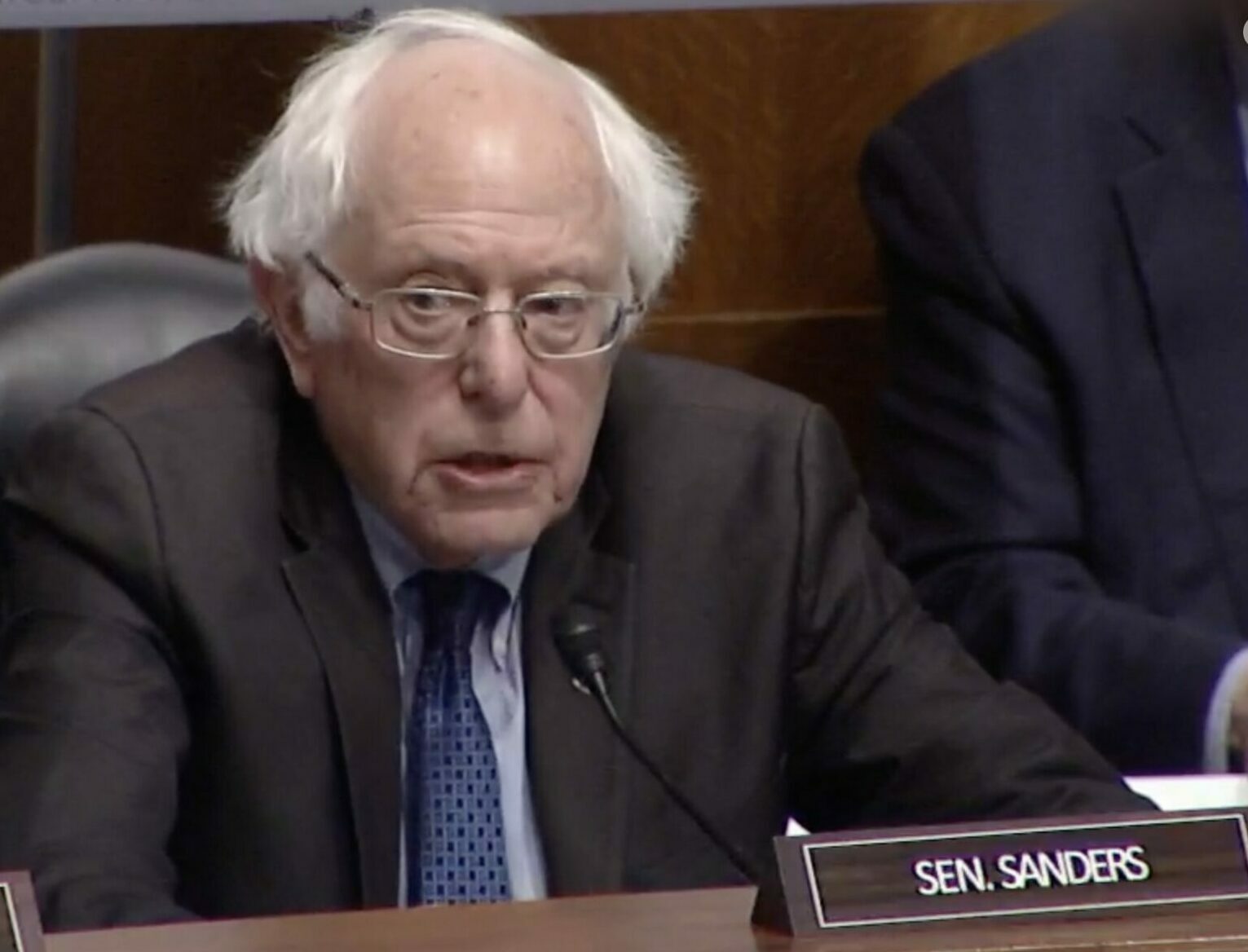
Senator Bernie Sanders (I-VT), Chair of the HELP Committee, led the hearing, arguing that 14 major pharmaceutical companies spent $87 billion more on stock buybacks and dividends over a 10-year period than they did on R&D. He pointed to the Inflation Reduction Act (IRA) as one step toward lowering prices and challenged the pharmaceutical CEOs testifying to commit to refusing additional compensation until all patients can afford their medications.
The pharmaceutical representatives included Joaquin Duato, Johnson & Johnson CEO; Robert Davis, Merck CEO; and Chris Boerner, Bristol Myers Squibb CEO. All three witnesses highlighted the steps their companies have taken to assist patient access to medicines via Patient Assistance Programs and the benefits their respective innovations have brought to U.S. patients. Duato, for example, explained that Johnson & Johnson’s average net price for medicines declined for the sixth year in a row by 3.5 percentage points—almost 20% over six years, and the real price adjusted for inflation represented a decline of more than 40%. In 2022 the company also paid $39 billion in rebate discounts and fees.
 Davis pointed out that, thanks to advances in cancer research and solutions like Merck’s drug, Keytruda and other similar innovations, the cancer mortality in the United States has fallen 33% from 1991 to 2021, representing 4 million Americans whose deaths have been averted.
While Sanders acknowledged the drug companies’ accomplishments, he pointed to patients who have to set up GoFundMe campaigns to afford Keytruda and other drugs and questioned why the drug is priced at $191,000 per year in the United States but $44,000 in Japan. Davis explained that the lower price in Japan and other countries comes with the trade-off of decreased access to the drug.
Ranking Member Bill Cassidy (R-LA), who is the s the first physician to sit as HELP Ranking Member or Chairman since 1933, said he is all too aware of the problems with drug pricing in public health but that the situation is more complicated and nuanced than the Chair and majority will admit. “We can cherry pick examples of other countries doing something better but I can cherry pick the opposite,” Cassidy said. He then gave the example of Canada, which he said is struggling with specialty care and sent 4,800 Canadians to Washington state in May of last year to ensure people have faster access to life saving radiation treatment. “The United States is not perfect but if we cherry pick from other countries we have to do a more thorough investigation to see is there a balance there,” Cassidy said.
 Senator Maggie Hassan (D-NH) raised the issue of patents, claiming that pharmaceutical companies “are doing everything they can to keep prices and profits sky high,” in part by “filing dozens or even hundreds of patents” and playing games with the patent system to block low cost alternatives from coming to market. Hassan and Senator Mike Braun (R-IN), along with Representatives Annie Kuster (D-NH) and Diana Harshbarger (R-TN) introduced the Medication Affordability and Patent Integrity Act in September of last year, which Hassan said would “would help break up these patent walls.”
The second panel of the hearing featured two public health advocates and one economist who focused almost exclusively on the role of patents in the high cost of U.S. drugs. Peter Maybarduk, Access to Medicines Director at Public Citizen, and Tahir Amin, Chief Executive Officer at Initiative for Medicines, Access & Knowledge (I-MAK), both testified that monopoly power in the form of patents is the key problem with the system. Maybarduk’s written  submission shows that much of the data relied on for his testimony comes from I-MAK, so the two witnesses’ testimony was essentially the same. Maybarduk took exception to the pharma reps’ contention that “middle-men” like pharmacy benefit managers (PBMs) are to blame for the pricing problems, stating that “high prices are the whole reason we have a middle men problem. The fish rots from the head.” Maybarduk cited statistics that show drug makers capture two-thirds of the revenue in the pharmaceuticals market, representing $323 billion, while PBMs capture $23 billion “You can’t fix the problem of the pharmaceutical industry unless you go to the root of the problem,” he added.
 Amin is perhaps the best-known anti-patent voice among the patent community, and opened his testimony by noting that he began his career as an IP attorney and spent the first decade of his career learning both the legal and business side of IP and its importance to inventors, investors and companies. “I also learned the loopholes to game the system,” Amin said, explaining that is why he co-founded I-MAK and left the commercial world. Amin cited controversial data that has been widely challenged by the patent community analyzing the top 10 selling drugs which found that those drugs had 1,429 patent applications filed on them as of 2022, 741 of which were granted. That amounts to an average of 74 patents granted per drug, Amin said. He also went on record to predict that Merck will not allow a biosimilar of Keytruda—which Amin claims will have a total patent term of 37 years by 2039, when the latest-expiring patent is up—to enter the market until 2034.
Professor Darius Lakdawalla of the University of Southern California took a middle ground approach, but overall agreed with the pharmaceutical CEOs that “blunt price controls are not the solution to the worsening affordability of prescription drugs or to global free-riding.” The Leonard D. Schaeffer Center for Health Policy & Economics, where Lakdawalla is Director, has found that “introducing European-style pricing policies would reduce Americans’ life expectancy.” He said that research has shown that “increased access to the latest treatments matters” and that introducing pricing policies would cost U.S. consumers about half a year of life expectancy. Senator Sanders challenged this metric earlier in the hearing, citing statistics that show most other developed countries have a higher life expectancy of between four and nine years more than the United States.
The U.S. Chamber of Commerce’s Global Innovation Policy Center (GIPC) criticized Sanders for holding the hearing and accused him of “grandstanding” at the expense of real solutions. The Chamber said:
“Once again, Senate HELP Committee Chairman Bernie Sanders is weaponizing a U.S. Senate hearing to advance a political agenda. Tomorrow’s spectacle promises to be a ‘legislative placebo,’ with a heavy dose of partisan theatrics overshadowing a meaningful exchange of ideas.
“The fact is that patients in America have greater access to the latest medical innovations than anywhere else. So why do the Chairman and the Biden Administration want to impose illegal price controls that will lead to fewer new medicines, longer wait times for patients, and hinder the private sector-led research vital to discovering the next breakthrough treatment or cure?
“We call on Chairman Sanders to abandon the political theatrics and refocus his efforts on real solutions.”
The Chamber also submitted a statement for the record to the Committee that addressed the harms of recent policies like price control mechanisms in the IRA and the proposed framework on march-in rights under the Bayh-Dole Act.